Mudlarking & Treasure
Fort Darnet has always had a way of capturing the imagination.
Sitting out on the River Medway, surrounded by tide, mud, wildlife and open sky, the fort feels part military landmark, part lost island, and part time capsule. Long before the current plans to protect and bring new life to the site, Fort Darnet was already attracting the attention of explorers, history enthusiasts and mudlarkers fascinated by the stories hidden around the Medway foreshore.
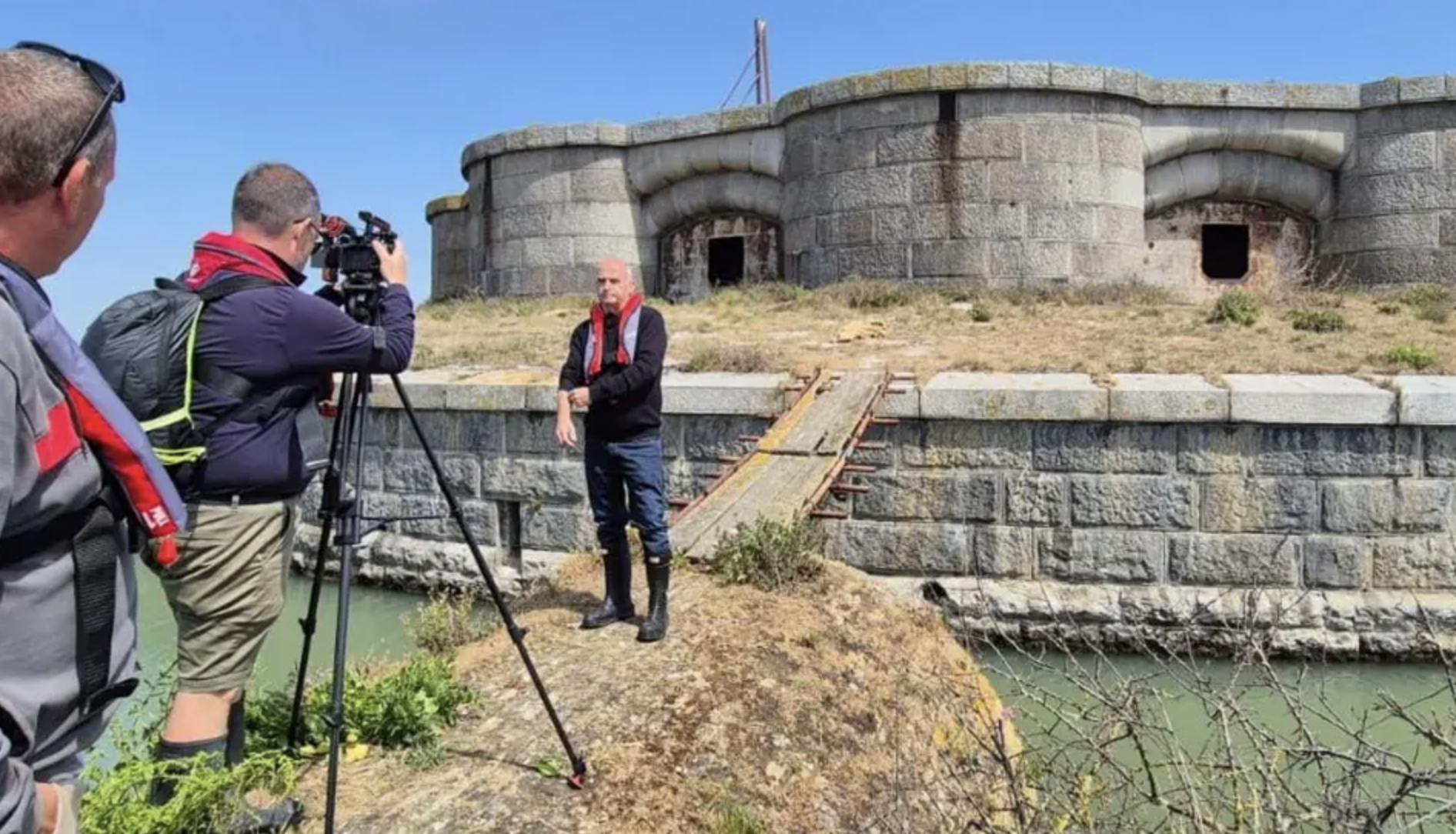
Two videos by Nicola White, also known as Tideline Art, give a powerful glimpse into that world. One follows a mudlarking trip full of historic finds, with Fort Darnet and Hoo Fort forming part of the wider story.
The other captures a haunting night-time visit to the Medway island, showing just how atmospheric, isolated and unusual Fort Darnet can feel.
A fort shaped by the tide
Fort Darnet was built in the late 19th century as part of the defences of Chatham Naval Dockyard. Kent’s Historic Environment Record notes that construction began in 1870, the fort was completed and operational by 1872, and it was later disarmed and abandoned by the army before the First World War.
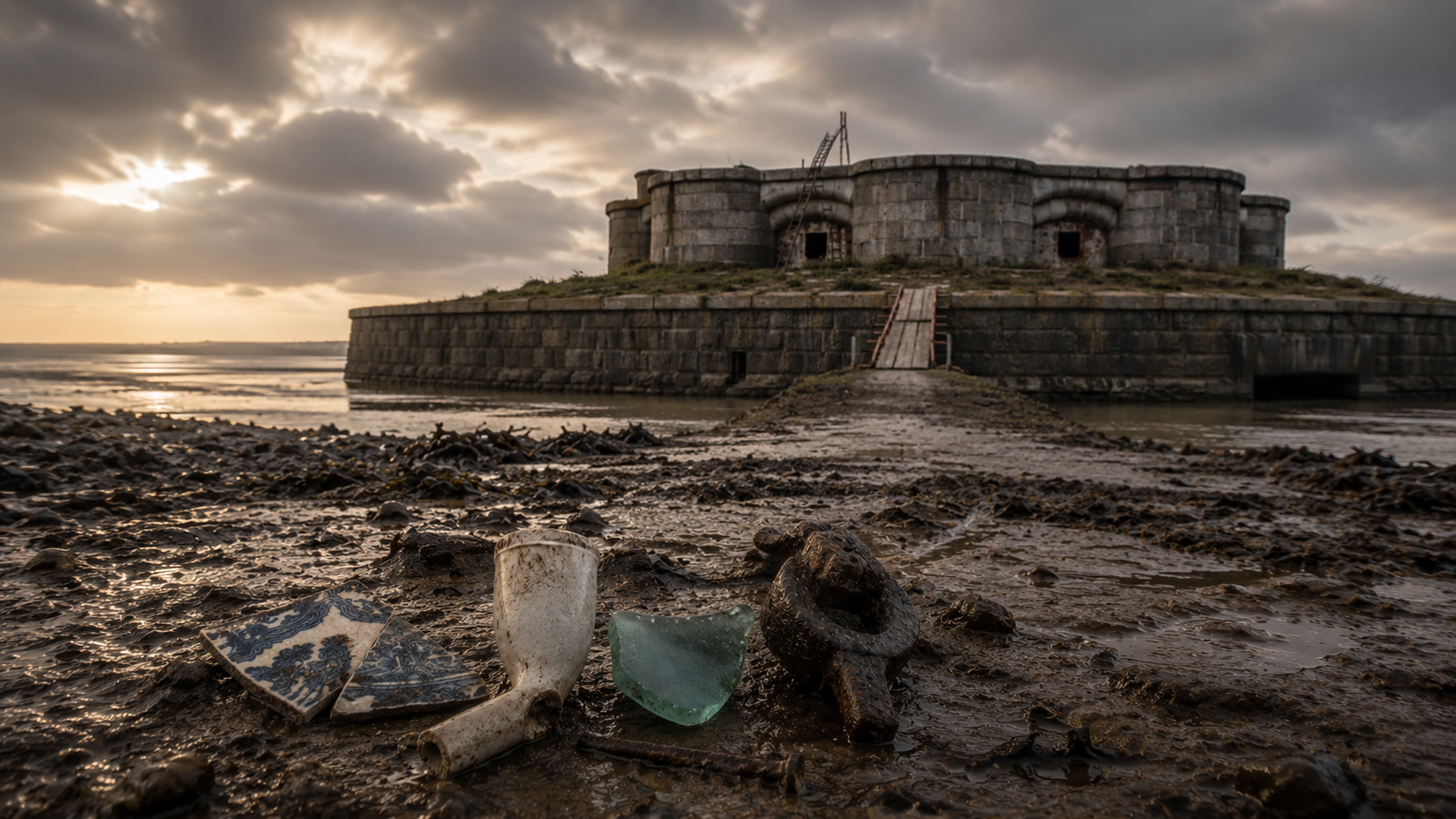
That history is still visible today. The fort’s round structure, central courtyard, brickwork, gun casements and flooded areas all help explain why it remains such a striking landmark. It is not polished or ordinary. It is raw, exposed and shaped by its environment.
That is what makes the mudlarking footage so interesting. It does not present Fort Darnet as a museum piece behind glass. It shows it as part of a living landscape, where the river is constantly revealing and concealing fragments of the past.
Why these videos matter
Mudlarking is often about small discoveries: broken pottery, old pipes, metalwork, glass, tools and fragments that might otherwise be missed. Around a place like Fort Darnet, those finds take on extra meaning because they sit within a wider story of naval defence, river traffic, military engineering and local life.
The videos help show why the Medway is so special. Fort Darnet is not just a building on an island. It is part of a wider historic setting that includes Hoo Fort, the river channel, the mud flats, wildlife, wrecks and remains connected to centuries of use.
They also show why the site needs careful management. Fort Darnet is beautiful, but it is not currently a place for casual or unauthorised exploration.
Safety and access
Fort Darnet is now privately owned and there is currently no public access to the site. The official Fort Darnet website makes clear that the fort must not be approached or entered without prior authorisation, and warns of hazardous conditions including unstable structures, concealed drops and water-filled areas.
That safety message is important. The atmosphere seen in these videos is part of what makes the fort so compelling, but the same conditions also make it dangerous. Any future visits, filming, events or experiences must be properly planned, authorised and managed.
Looking ahead
The renewed interest in Fort Darnet shows just how much potential the site has. Recent coverage has highlighted ideas including filming, music, wellbeing activities and ghost tours, alongside the need for safety measures before the site can be opened up in any controlled way.
These mudlarking videos are a reminder of what makes Fort Darnet special: the isolation, the history, the views, the sounds of the river and the sense that every tide has left another story behind.
As plans develop, the aim is to protect that character, not lose it. Fort Darnet’s future should respect its past, preserve its atmosphere and allow people to experience it safely, responsibly and with the right permissions in place.