Why Was Fort Darnet Built?
Fort Darnet was constructed in the late 19th century to defend the River Medway and the vital Chatham Dockyard. Following concerns about French naval expansion, Britain invested heavily in coastal fortifications, leading to the construction of a series of defensive structures known as the Palmerston Forts.
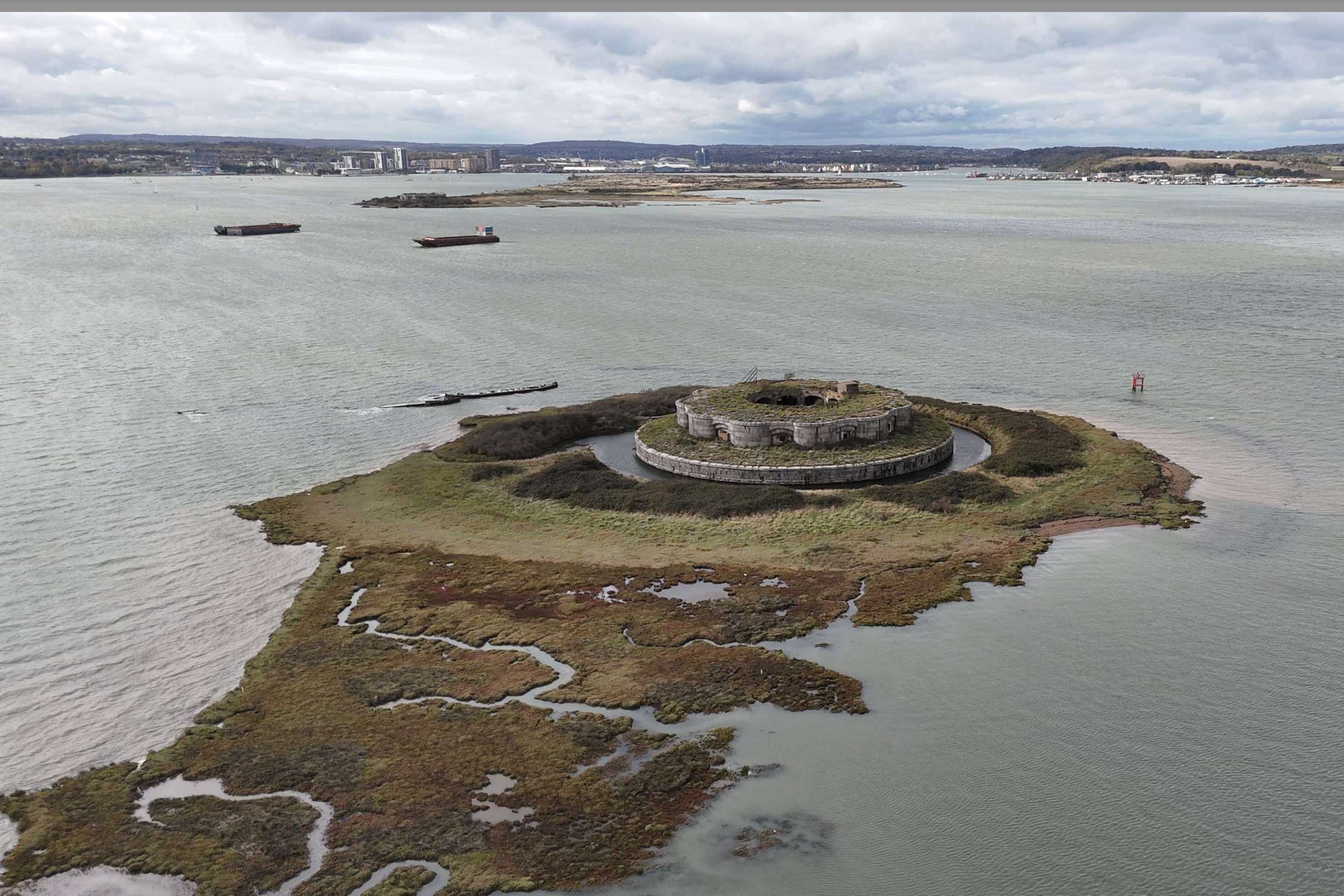
Located opposite Hoo Fort, Fort Darnet was strategically positioned to create a defensive bottleneck across the Medway channel.
Design and Construction
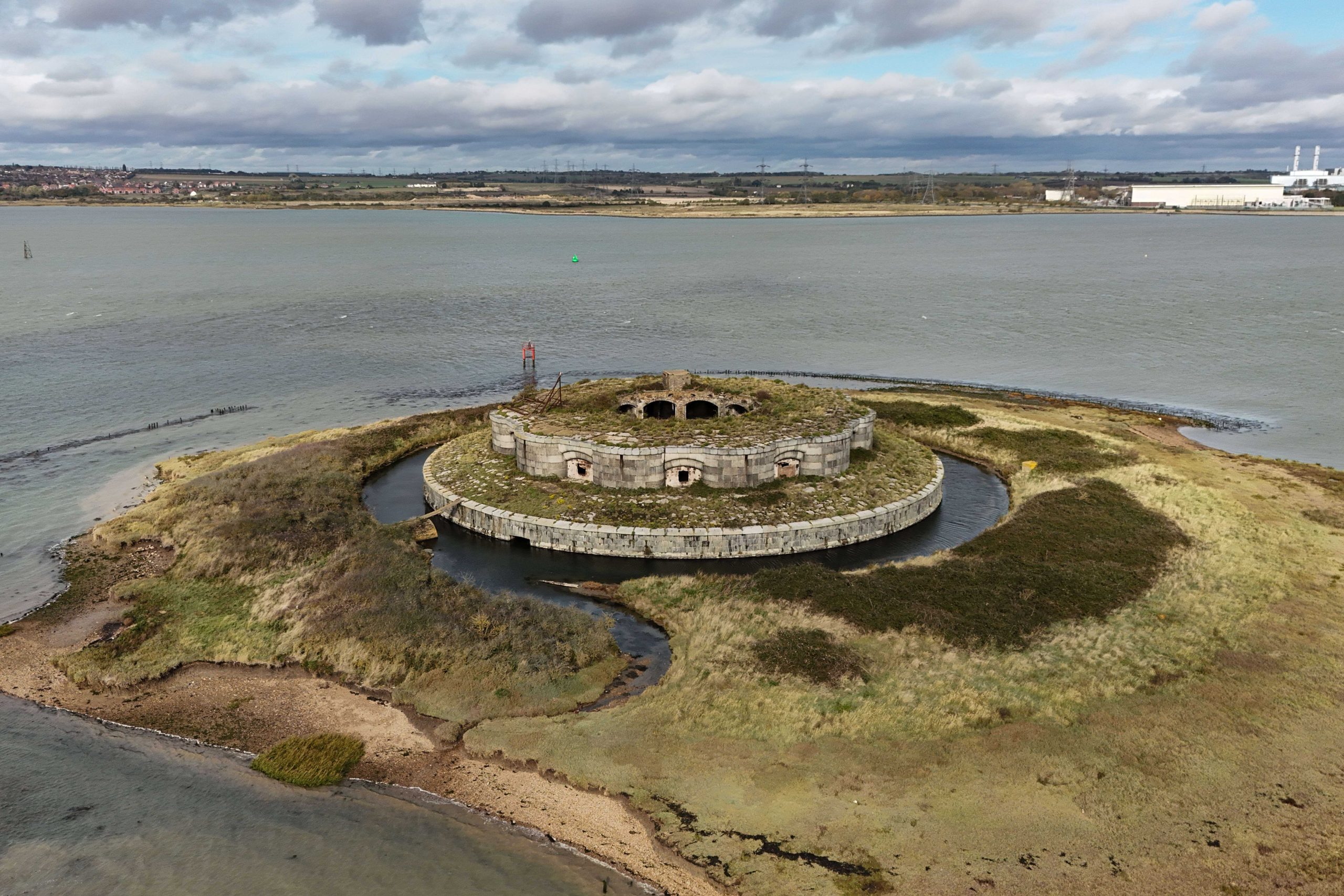
Originally planned with two tiers of artillery, construction challenges and cost pressures resulted in a single-tier circular battery. The fort was built on a raised artificial island and designed to accommodate up to 100 soldiers.
Its thick granite walls, arched casemates, and elevated gun positions reflect the engineering priorities of the period — durability, defensive strength, and commanding views across the estuary.e.
Later Military Use & Fort Darnet Today
Although decommissioned before the First World War, Fort Darnet regained strategic relevance during the Second World War as an observation post. Additional wartime features were added to support surveillance and defence operations.
Now recognised as a Scheduled Monument, Fort Darnet remains one of the most distinctive heritage landmarks in Kent. Accessible only by boat, it offers panoramic views across the Medway and stands as a lasting reminder of Britain’s coastal defence network.
From Victorian military planning to modern heritage interest, Fort Darnet continues to capture imagination and attention.